


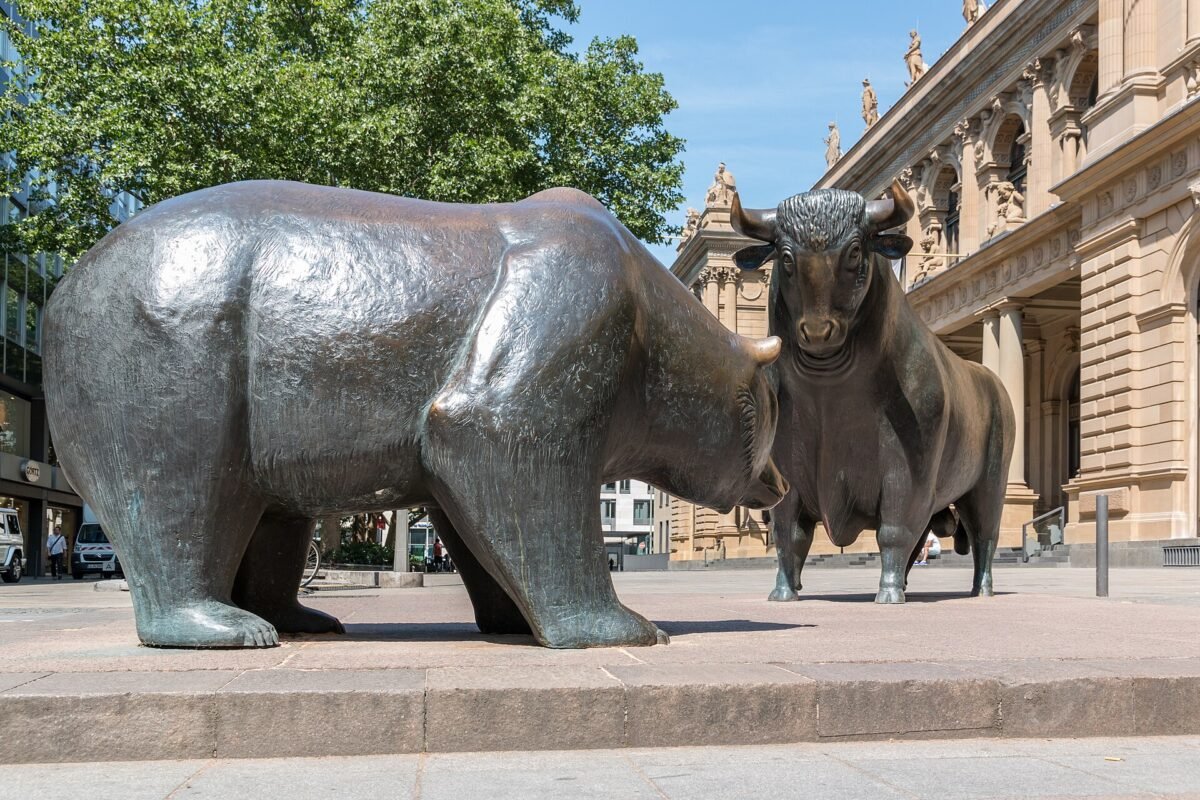
The difference in correction vs bear market is mostly size. A correction is a decline of 10% to 20% from a recent peak; a bear market is a decline of 20% or more, usually lasting longer and often tied to a recession or a major shock. Corrections are common and often recover within months, while bear markets can take a year or more to bottom and longer to recover.
In late October 2026, the Nasdaq 100 slipped into correction territory as investors worried about how much big tech is spending on AI data centers and what that means for free cash flow. Headlines swung between “healthy pullback” and “the start of something worse.” Both labels come with specific definitions, and knowing them helps you react calmly instead of emotionally.
Key takeaways
- A correction is a 10%–20% drop from a recent high; a bear market is 20% or more.
- Corrections happen regularly and many recover within a few months.
- Bear markets are rarer, often linked to recessions, financial crises or sharp rate rises.
- Nobody can reliably tell in advance whether a correction will become a bear market.
- Selling during a decline locks in losses and risks missing the rebound.
What is a stock market correction?
A stock market correction is a decline of at least 10%, but less than 20%, in a major index or stock from its most recent peak.
Corrections are measured from the high, usually using closing prices. If the S&P 500 peaks at 7,000 and closes at 6,300, it’s down 10% and officially in a correction. The label applies to an index, a sector or a single stock; the Nasdaq 100 can be in a correction while the broader market isn’t.
Corrections often have an identifiable trigger: an interest rate scare, a disappointing earnings season, a geopolitical shock, or concerns that a popular theme got ahead of itself. The late-2026 tech decline is a textbook example of the last one. Our explainer on the Nasdaq correction covers the AI-spending worries behind it.
What is a bear market?
A bear market is a decline of 20% or more from a recent peak, typically lasting months. It ends, by most definitions, when the index bottoms and then rises 20% from that low, starting a new bull market.
Bear markets usually reflect bigger problems than a correction: an expected or actual recession, collapsing corporate profits, a financial crisis, or a sharp tightening of monetary policy.
Correction vs bear market: key differences
| Correction | Bear market | |
|---|---|---|
| Size of decline | 10% to 20% | 20% or more |
| Typical cause | Valuation worries, rate scares, sector-specific fears | Recession, financial crisis, aggressive rate hikes |
| Frequency | Common; many years include one | Less common |
| Typical duration | Weeks to a few months | Many months to over a year |
| Recovery | Often months | Often a year or more to reclaim the old high |
| Economic backdrop | Often still growing | Frequently weak or contracting |
How long do corrections and bear markets last?
History offers ranges, not rules. A few recent S&P 500 episodes show how varied they are:
- 2020 (pandemic): a fall of about 34% in roughly a month, one of the fastest bear markets on record, followed by an equally fast recovery.
- 2022 (inflation and rate hikes): a decline of about 25% over most of the year as the Fed raised rates aggressively. It took until early 2024 for the index to set a new high.
- 2025 (tariff shock): a drop of nearly 19% from February to April, just shy of bear territory, before a sharp rebound.
- 2007–2009 (financial crisis): a decline of more than 50% over about 17 months, with years needed to fully recover.
The lesson: severity depends on what’s causing the decline. A selloff driven by valuation worries in a growing economy behaves differently from one driven by a banking crisis.
Is a market crash different from a bear market?
“Crash” isn’t a formal term. It usually describes a very sudden, steep drop over days, like October 1987, when the Dow fell about 22.6% in a single day, or March 2020. A crash can start a bear market, but many bear markets are slow grinds rather than crashes.
Can you tell if a correction will become a bear market?
Not reliably. Investors watch some warning signs:
- Recession signals, such as rising unemployment or falling corporate earnings. Our guide on how to prepare for a recession lists common indicators.
- Interest rates. Rising Treasury yields and a Fed leaning toward hikes pressure valuations. In October 2026 the Fed held at 3.75%–4.00%, with two officials pushing for a hike; the Federal Reserve’s FOMC page lists every decision.
- Credit stress, such as widening spreads on corporate bonds.
- Breadth: whether the decline is spreading from one sector to the whole market.
But plenty of corrections that looked scary ended quickly, and some bear markets began with mild-seeming dips. Anyone confidently predicting which this one is should be treated with skepticism.
What should you do during a correction or bear market?
- Check your timeline. Money you need within about two to three years shouldn’t be in stocks in the first place. If it is, consider moving it to safer assets gradually rather than all at once in a panic.
- Keep contributing. If you invest monthly through a 401(k) or dollar-cost averaging, declines let you buy more shares at lower prices.
- Rebalance. If stocks have fallen below your target allocation, rebalancing means buying a bit more of them, which is uncomfortable and usually right.
- Harvest losses. In taxable accounts, selling losing positions and buying similar (not substantially identical) funds can lower your tax bill. See tax-loss harvesting.
- Turn off the noise. Checking your balance daily raises the odds of a bad decision.
Our take
A correction is the price of admission for long-term stock returns. If you can’t stomach a 10% drop, the problem isn’t the market; it’s that your allocation is too aggressive for you. Fix that during calm periods, not in the middle of a slide.
The worst move is usually selling everything and waiting for “clarity.” Some of the market’s best days have historically come close to its worst ones, and missing a handful of them can significantly cut long-term returns. For more on staying steady, read our guide to handling market volatility. The SEC’s investor site, Investor.gov, also has free tools for checking whether your asset allocation matches your goals.
Frequently asked questions
How often do stock market corrections happen?
Corrections in the S&P 500 have historically been common, occurring every year or two on average, though with long gaps at times. They’re a normal feature of stock investing rather than a sign something is broken.
Is a 10% drop a correction?
Yes. A decline of 10% from a recent closing high meets the standard definition of a correction. A decline of 20% or more is considered a bear market.
Should I buy stocks during a correction?
If you have a long time horizon and money set aside specifically for investing, buying during a correction has historically worked out well. Don’t use your emergency fund, and don’t assume you’ve found the bottom.
What is the opposite of a bear market?
A bull market, a sustained period of rising prices, often defined as a rise of 20% or more from a bear market low. Bull markets have historically lasted much longer than bear markets.
Does a bear market mean a recession is coming?
Not always. Many bear markets have coincided with recessions, but some have happened without one, and stocks often start falling before a recession is officially declared. The two are related but not the same.
This article is for educational purposes only and is not financial advice. Consider speaking with a licensed professional before making investment decisions.




Community Insights
0 Comments